





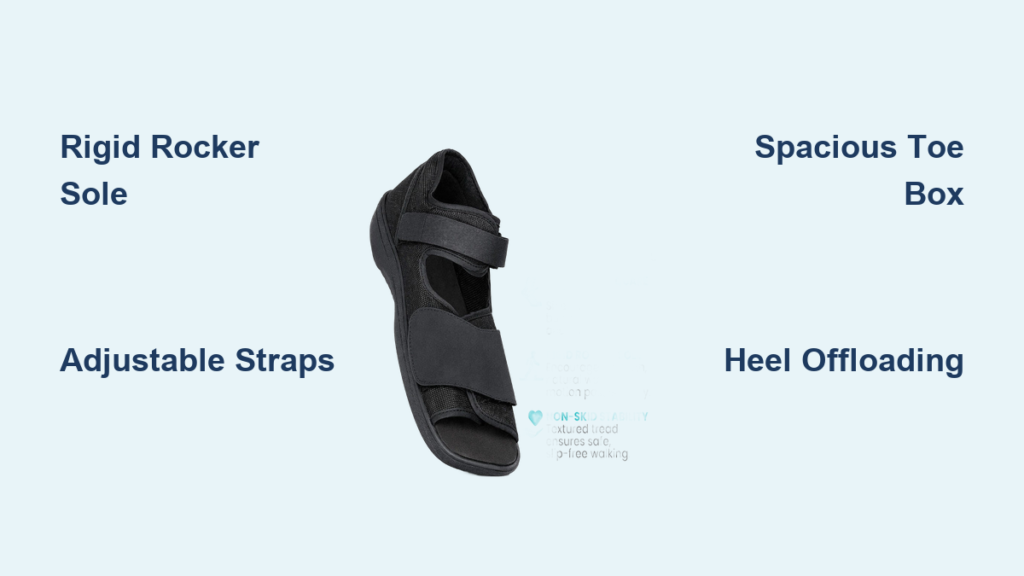
If you’ve just undergone foot surgery, your doctor likely handed you a post-op shoe—a bulky, rigid-looking boot designed to protect your healing foot. But what exactly is it, and why is it so important? A post-operative shoe, also known as a surgical walking boot or hard sole shoe, is a medical-grade device engineered to support safe mobility while shielding your foot from injury during recovery. Unlike regular shoes, it’s built with a rigid rocker-bottom sole, adjustable straps, and a roomy toe box to minimize pressure on surgical sites, reduce pain, and speed up healing.
Used after procedures like bunionectomy, metatarsal fracture repair, or diabetic wound care, this specialized footwear helps redistribute weight, limit harmful motion, and accommodate swelling or bulky dressings. Whether you’re recovering from a minor soft tissue correction or a complex bone realignment, a post-op shoe isn’t just a convenience—it’s a critical tool in preventing complications like reinjury, infection, or delayed healing. In this guide, you’ll learn how post-op shoes work, which features matter most, how to wear them correctly, and what real patients have to say about their recovery experience.
How a Post-Op Shoe Supports Healing After Surgery
A post-op shoe does far more than keep your foot covered—it actively promotes recovery through smart biomechanical design.
Protects Surgical Incisions and Healing Tissues
The rigid outer shell acts like a protective shield, guarding against accidental bumps, pressure, or twisting that could reopen incisions or damage repaired tendons and bones. This is especially vital after surgeries involving the forefoot, where even minor impacts can disrupt healing.
Minimizes Pain During Walking
By restricting movement in the toes and ball of the foot, the shoe reduces strain on sensitive surgical areas. Patients recovering from hammertoe correction or Morton’s neuroma surgery often report significantly less pain when walking with a post-op shoe versus traditional footwear.
Redistributes Weight to Prevent Pressure Sores
The rocker-bottom sole shifts weight away from the front and heel of the foot, promoting a smoother gait that doesn’t require toe push-off. This is essential for conditions like diabetic ulcers or plantar fascia release, where pressure on the sole can delay healing or cause tissue breakdown.
Accommodates Swelling and Dressings
Post-surgical swelling is normal, and bandages can be bulky. With adjustable Velcro straps and a wide toe box, post-op shoes adapt as your foot size changes—ensuring a secure fit without cutting off circulation.
Keeps Wounds Clean and Dry
The closed design helps protect incisions from dirt, moisture, and bacteria. When combined with a waterproof cast cover, it allows safer hygiene during showers, reducing the risk of infection.
Common Surgeries That Require a Post-Op Shoe
Not all foot issues need surgery—but when they do, a post-op shoe is often a key part of the recovery plan.
Bunion and Hammertoe Surgery
After realigning bones in the big toe or correcting bent toes, the front of the foot is highly vulnerable. A square-toe post-op shoe prevents pressure on healing joints and protects sutures from irritation.
Metatarsal and Toe Fractures
Healing broken bones requires immobilization and offloading. A forefoot offloading shoe shifts weight to the midfoot and heel, allowing fractures in the long bones of the foot to heal without constant stress.
Lisfranc and Midfoot Injuries
Injuries to the midfoot ligaments or bones benefit from stability. While severe cases may need a high-top CAM walker, milder injuries or later-stage recovery can use a standard post-op shoe.
Diabetic Foot Ulcers
For patients with diabetes, pressure on ulcers can lead to serious complications. A heel-offloading shoe elevates the heel to reduce contact with the ground, supporting tissue regeneration.
Plantar Fascia and Tendon Repairs
Surgical release of the plantar fascia or repairs to the Achilles tendon require reduced strain during ambulation. The rigid sole and heel elevation of a post-op shoe help prevent re-injury.
Charcot Foot and Neuropathic Conditions
In conditions like Charcot-Marie-Tooth disease, nerve damage leads to foot instability. A post-op shoe provides temporary support during flare-ups or after trauma.
Key Design Features That Make a Difference
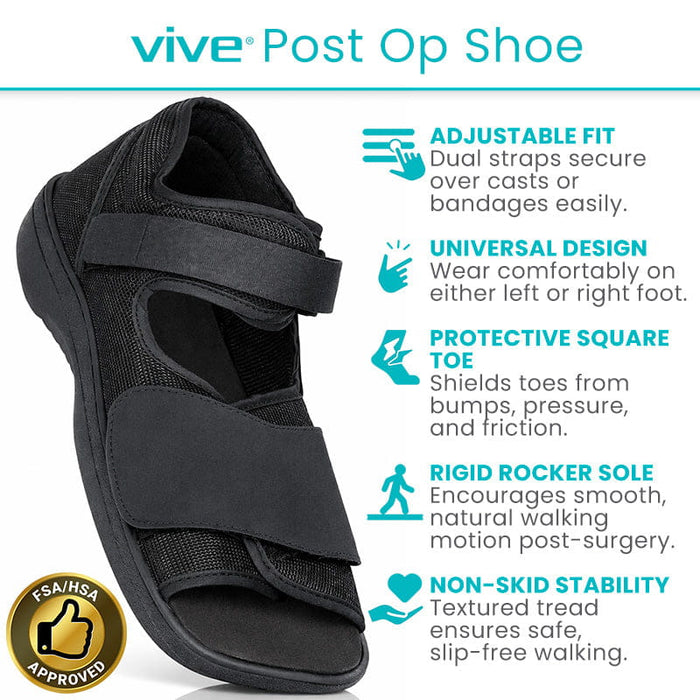
Every element of a post-op shoe serves a medical purpose—here’s what to look for.
Rigid Rocker-Bottom Sole (1” Thick)
Made from molded plastic or reinforced rubber, this curved sole promotes a heel-to-toe roll, minimizing forefoot pressure. It’s typically 1 inch thick, providing both elevation and shock absorption.
Why it matters: Reduces need for toe propulsion, protecting healing bones and soft tissues.
Spacious Square or Rounded Toe Box
Offers room for swollen toes, bandages, or casts. The square design doubles as a bumper, preventing injury from stubbing.
Pro tip: Closed-toe models offer more protection; open-front versions improve breathability.
2–3 Adjustable Hook-and-Loop Straps
Allows customized fit as swelling changes. Secure the ankle first, then midfoot and forefoot, ensuring stability without restricting blood flow.
Warning: Never tighten straps so much that toes become numb, cold, or discolored.
Universal Left/Right Fit
Designed to be worn on either foot, eliminating the need for separate left/right models—ideal for single-foot recovery.
Lightweight, Durable Materials (0.74–1.5 lbs)
Constructed from nylon, polyester, or breathable mesh, these shoes reduce walking fatigue while resisting wear and tear.
Non-Skid Rubberized Tread
Deep treads on the sole enhance traction on slippery floors, reducing fall risk—especially important for elderly patients.
Latex-Free Construction
Inner lining made of hypoallergenic foam prevents allergic reactions and increases comfort during extended wear.
Types of Post-Op Shoes and When to Use Them
Different injuries call for different levels of support.
| Type | Best For | Key Features |
|---|---|---|
| Standard Post-Op Shoe | Minor surgeries, sprains | Rigid sole, adjustable straps, universal fit |
| Forefoot Offloading Shoe | Bunion surgery, metatarsal fractures | Wedge design shifts weight backward |
| Heel Offloading Shoe | Heel ulcers, plantar surgery | Elevates heel to reduce pressure |
| Pediatric Post-Op Shoe | Children’s injuries | Smaller sizes, lightweight build |
| High-Top Walking Boot (CAM Walker) | Ankle fractures, tendon repairs | Extends above ankle for added stability |
| Open-Top Post-Op Shoe | Severe swelling, sensitive skin | Soft upper, rigid sole, easy access |
Expert note: Your surgeon will prescribe the right type based on your weight-bearing status and surgical site.
How to Wear a Post-Op Shoe Correctly
Improper use can lead to discomfort or complications.
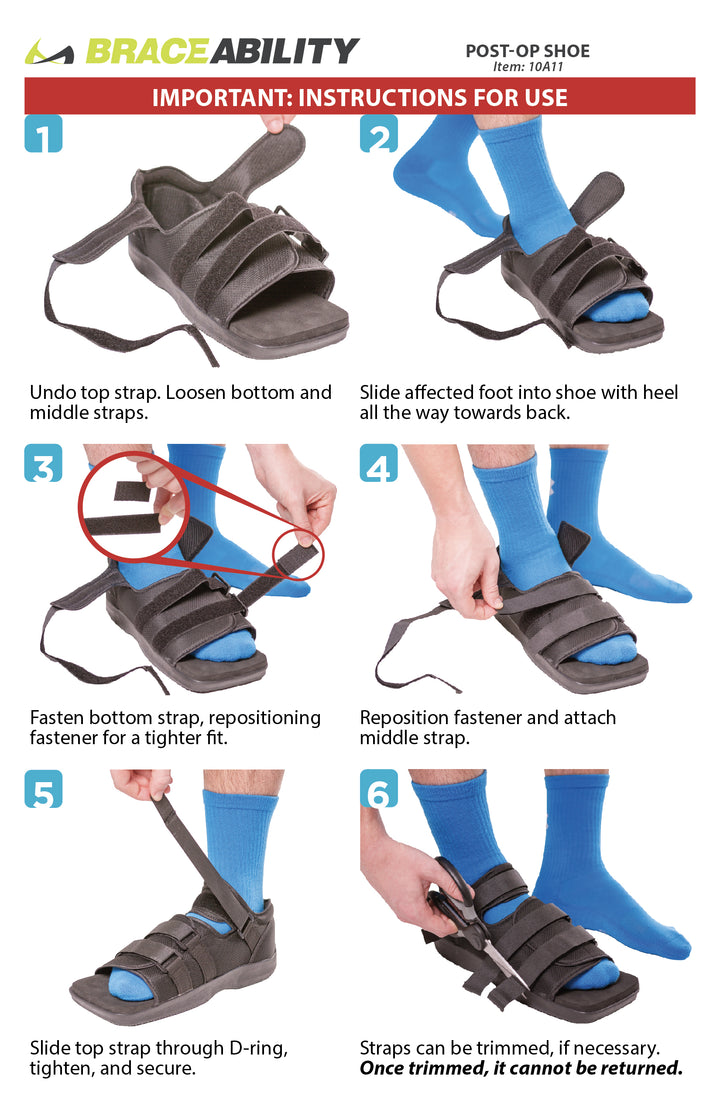
Step-by-Step Application
- Sit down to prevent losing balance.
- Slide your foot in, heel first, until it’s fully seated.
- Secure straps starting at the ankle, then midfoot, then forefoot.
- Check circulation: Toes should be warm, pink, and able to wiggle.
- Take a few test steps to ensure no slipping or tripping.
Clinical tip: Inspect your foot every few hours for redness, numbness, or pressure sores under the straps.
When to Wear It
- 24/7: Common in early recovery (first 2–3 weeks)
- Only while walking: For partial weight-bearing phases
- Never while driving: Can impair brake and accelerator control
Showering: Remove only if your doctor approves. Use a waterproof cast protector to keep the foot dry.
Sizing and Fit Tips for Maximum Comfort
Getting the right size prevents pain and ensures protection.
How to Measure
- Wear your recovery sock or dressing
- Measure from heel to longest toe
- Compare to manufacturer’s chart
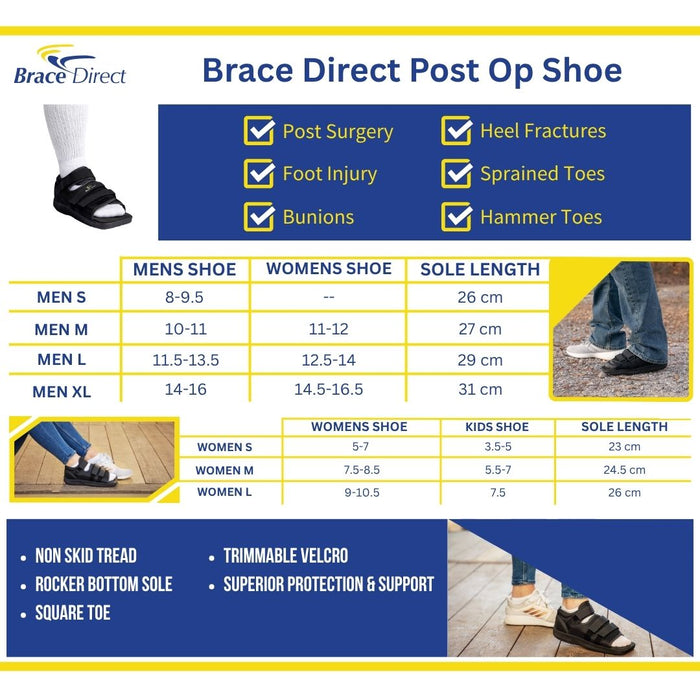
Example: Brace Direct L3260
| Size | Men’s | Women’s | Sole Length |
|---|---|---|---|
| Small | 6.5–9 | — | ~10.24 in |
| Medium | 9.5–11 | 10.5–12.5 | ~11.02 in |
User tip: Many recommend ordering a half to full size up to accommodate swelling.
Cleaning and Maintenance Do’s and Don’ts
Keep your shoe functional and hygienic.
✅ Do:
– Hand wash with mild soap and warm water
– Spot clean stains
– Air dry away from heat
– Inspect straps and sole weekly
❌ Don’t:
– Machine wash or dry
– Soak in water
– Expose to radiators or direct sunlight
FSA and HSA Eligibility: Save on Your Purchase
Most post-op shoes qualify as durable medical equipment (DME), meaning you can use FSA or HSA funds to buy them tax-free. Models like the Brace Direct L3260 are PDAC-approved with HCPCS code L3260, meeting Medicare documentation standards.
Note: Submit your receipt and prescription if required by your plan.
Top Brands Compared: Best Value and Performance
| Brand | Model | Key Features | Price | Rating |
|---|---|---|---|---|
| BraceAbility | Closed Toe Shoe | Lightweight, FSA-eligible | $34 | 4.3/5 |
| ProCare | 79-81235 | Amazon’s Choice, durable | $15 | 4.1/5 |
| Brace Direct | L3260 | PDAC-approved, 3 straps | $30 | 4.3/5 |
| United Ortho | Air Cam Walker | Pneumatic support | $58 | 4.4/5 |
Best value: ProCare 79-81235
Best support: United Ortho Air Cam Walker
Real Patient Feedback: What Works (and What Doesn’t)
Praises
- “Perfect for protecting an injured foot.” – Gerry P.
- “Very comfortable and easy to adjust.” – Donna
- “Could walk and even drive with it.” – Ronald M.
Complaints
- Sizing issues: Some found the toe box too long
- Limited ankle support
- Tripping hazard on rugs
Pro tip: Practice walking on flat surfaces and shorten your stride.
Recovery Best Practices
- Follow weight-bearing instructions (NWB, PWB, FWB)
- Check for redness, numbness, or swelling
- Transition to orthopedic sneakers gradually
- Use a cast protector when showering
Final Note
A post-op shoe is more than temporary footwear—it’s a medically essential recovery tool that protects your surgery, reduces pain, and supports safe walking. With features like a rigid rocker sole, adjustable fit, and FSA eligibility, it’s a smart investment in your foot health. Always follow your doctor’s guidance, wear it as directed, and give your foot the time it needs to heal—your mobility depends on it.