






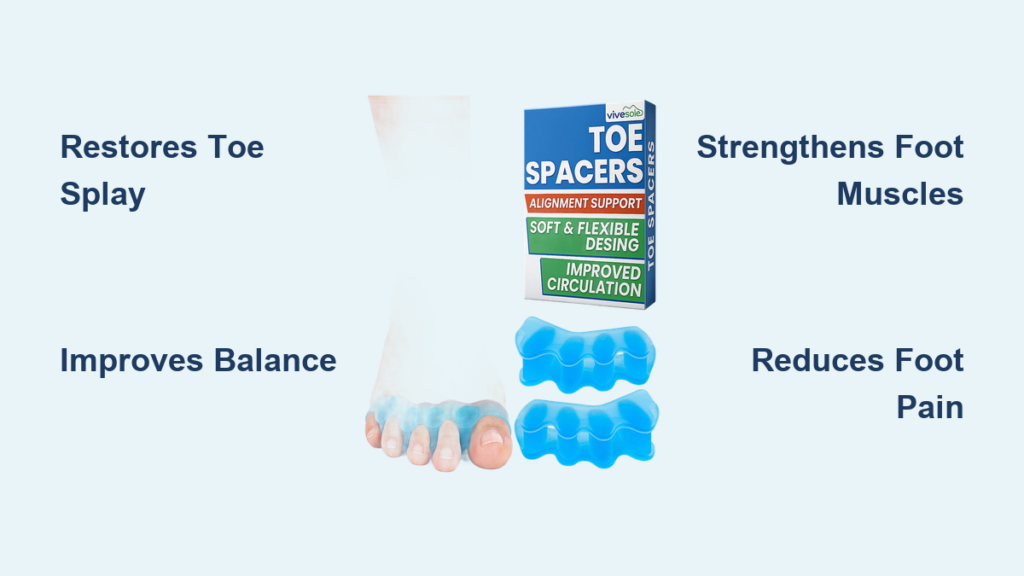
If your feet have spent years confined in narrow shoes, you’re not alone—and the consequences go far beyond discomfort. Millions experience foot pain, poor balance, and inefficient movement due to compressed, misaligned toes. The solution? Toe spacers, small yet powerful tools designed to restore your toes to their natural splay and support healthier foot function. More than just a comfort aid, consistent use of toe spacers can lead to measurable improvements in posture, gait, and overall musculoskeletal health.
The human foot is engineered to be widest at the toes, forming a stable, tripod-like base for standing, walking, and running. Yet most modern footwear squeezes the forefoot, forcing toes together and weakening the intrinsic muscles over time. This unnatural alignment contributes to bunions, plantar fasciitis, and poor balance. Toe spacers counteract these effects by gently separating the toes, encouraging proper alignment, and reactivating dormant muscles. Whether you’re an athlete, office worker, or someone struggling with foot pain, understanding how toe spacers promote natural alignment is key to reclaiming healthier, more resilient feet—and better whole-body mechanics.
Restores Natural Toe Splay and Reverses Foot Deformities
Wearing toe spacers helps reverse the unnatural inward collapse of the toes caused by years of constrictive footwear. By physically separating each toe, they encourage the foot to return to its intended wide, fan-like shape—restoring the natural architecture evolution designed for optimal function.
Corrects Toe Crowding and Overlapping
Chronic compression from narrow shoes causes toes to shift out of place, often leading to overlapping or crossover toes—especially involving the big and little toes. Toe spacers reduce this crowding by maintaining space between digits, which:
– Prevents crossover toes (where one toe crosses over another)
– Reduces angular stress on joints
– Supports early-stage bunion correction by minimizing deviation of the big toe
This realignment happens gradually, much like orthodontic braces straighten teeth. Over time, with consistent use, ligaments, tendons, and fascia adapt to a healthier configuration, slowing or halting the progression of structural deformities.
Maintains Healthy Metatarsal Spacing
Proper spacing between the metatarsal heads—the bones behind the toes—is essential for even weight distribution. Narrow shoes compress these bones, increasing pressure on nerves and soft tissues. Toe spacers help preserve natural separation, reducing the risk of:
– Nerve compression
– Morton’s neuroma
– Forefoot pain (metatarsalgia)
This not only alleviates current discomfort but also helps prevent long-term structural damage.
Enhances Balance, Stability, and Proprioception
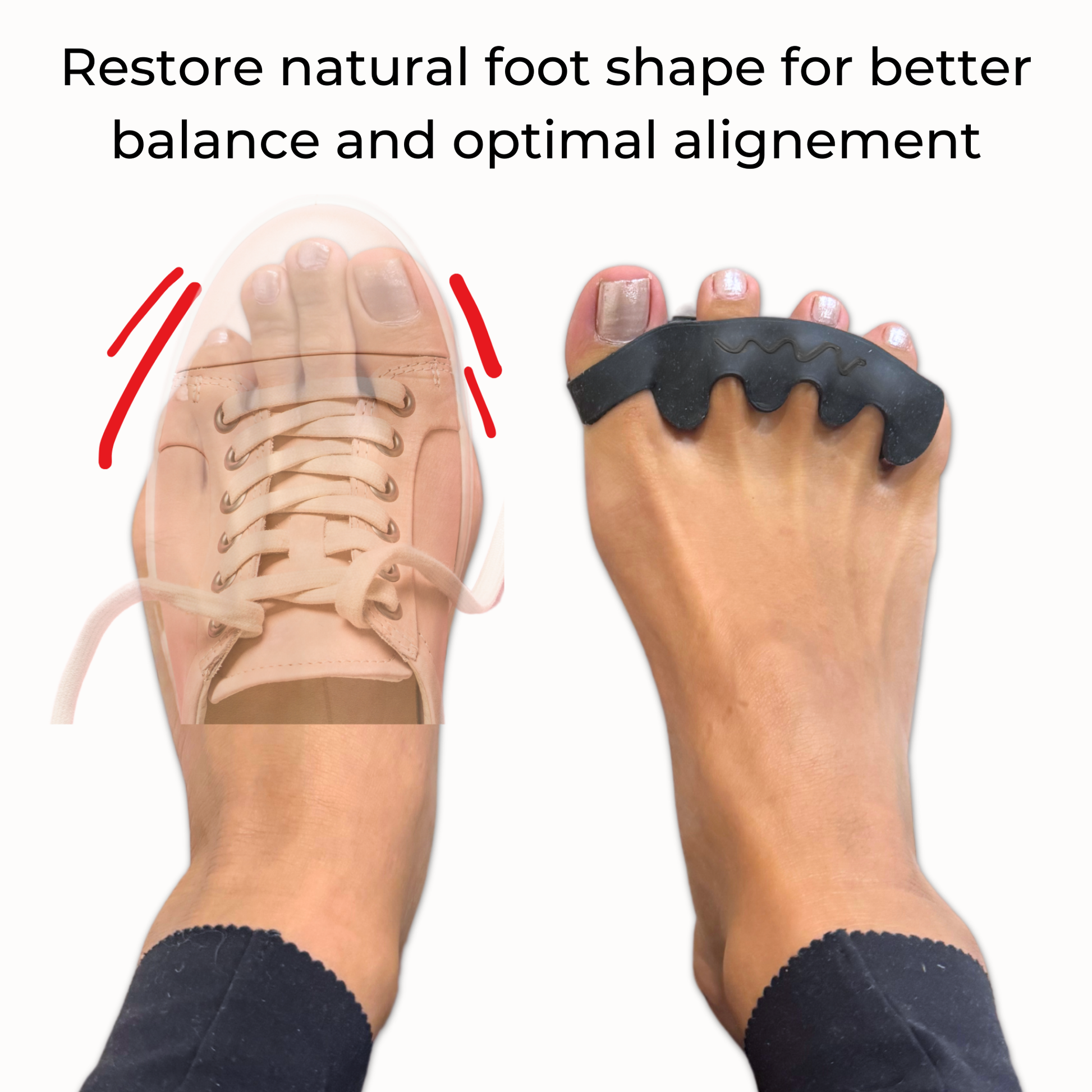
A stable foot begins with a wide base of support. When your toes are properly aligned and splayed, they create a broader foundation for standing, walking, and moving—dramatically improving balance and control.
Improves Postural Control and Sensory Feedback
Separated toes make more contact with the ground, stimulating mechanoreceptors in the skin and joints. This enhances proprioception—your body’s awareness of foot position—critical for balance, especially on uneven terrain.
- Clinical studies show improved dynamic postural balance in users wearing toe spacers
- Greater sensory feedback reduces fall risk, particularly in older adults
- Enhanced stability benefits athletes during cutting, pivoting, and landing
Pro Tip: Pair spacer use with barefoot balance drills (e.g., single-leg stands) to maximize gains in stability.
Distributes Weight More Evenly Across the Forefoot
With toes naturally splayed, the foot spreads load more efficiently. This reduces localized pressure points that contribute to fatigue and injury.
- Less strain on the ball of the foot
- Improved shock absorption during walking and running
- Reduced reliance on arch supports due to better intrinsic muscle engagement
This biomechanical advantage translates to less foot fatigue during long days on your feet.
Strengthens Intrinsic Foot Muscles and Supports Arch Function

Most people don’t realize that the arch of the foot is dynamically supported by over 20 small muscles located entirely within the foot. These intrinsic muscles weaken when confined by shoes, leading to flat feet and instability.
Activates Abductor Hallucis and Interossei Muscles
Toe spacers promote active engagement of key stabilizing muscles:
– Abductor hallucis: Supports the medial arch and big toe alignment
– Dorsal and plantar interossei: Control toe spreading and adduction
– Lumbricals: Assist in toe flexion and extension
As these muscles reactivate, users often notice firmer, more resilient arches—even without external orthotics.
Enhances the Windlass Mechanism for Efficient Gait
During walking, full big toe extension tightens the plantar fascia, lifting the arch and turning the foot into a rigid lever for efficient push-off. Crowded toes limit this motion, but spacers allow for greater extension, improving the windlass mechanism.
- More powerful toe-off during gait
- Reduced calf fatigue
- Lower risk of plantar fasciitis due to better fascial tension regulation
User Insight: Runners using Correct Toes report feeling “more connected” to the ground and experiencing smoother transitions through the stride cycle.
Boosts Circulation and Nerve Health
Narrow shoes compress blood vessels and nerves in the forefoot, leading to cold feet, numbness, and delayed healing. Toe spacers counteract this by opening up interdigital spaces.
Increases Blood Flow to Toes
Thermal imaging studies show measurable increases in toe temperature after just one hour of spacer use—indicating improved circulation.
- Warmer feet due to enhanced blood flow
- Faster recovery from microtrauma (e.g., long runs or hikes)
- Reduced risk of tissue breakdown
This benefit is especially valuable for those with circulatory concerns or who spend hours seated.
Relieves Nerve Compression
By reducing pressure between toes, spacers alleviate irritation of digital nerves.
- Alleviates symptoms of Morton’s neuroma
- Decreases tingling and numbness
- Promotes healthier nerve gliding
Caution: Individuals with diabetes or neuropathy should consult a healthcare provider before use, as reduced sensation increases the risk of unnoticed irritation.
Prevents Skin Irritation and Friction Injuries
Constant rubbing between toes leads to blisters, corns, and calluses—common complaints among runners, hikers, and people in tight shoes.
Reduces Blisters and Chafing
Toe spacers act as soft buffers between digits, eliminating direct skin-to-skin contact.
- Ideal for long-distance runners and hikers
- Prevents sock slippage that causes friction
- Minimizes shear forces during repetitive motion
One user reported eliminating recurring toe bruising after switching to Injinji toe socks paired with spacers.
Helps Manage Ingrown Toenails
Lateral pressure from crowded toes pushes nail folds inward, contributing to ingrown toenails. Spacers reduce this pressure, especially when combined with proper trimming and wide-toe-box footwear.
- Less inflammation around nail beds
- Easier nail maintenance
- Fewer infections
Regular use may prevent recurrence in mild cases.
Optimizes Gait and Athletic Performance
For active individuals, toe spacers aren’t just about comfort—they enhance efficiency, reduce injury risk, and support peak performance.
Improves Weight Distribution During Gait
Traditional shoes with elevated heels shift weight forward onto the forefoot. This overloads the metatarsals and increases injury risk. Spacers help redistribute load more evenly.
- Less pressure on the ball of the foot
- Reduced strain on joints and tendons
- Lower incidence of stress fractures and metatarsalgia
This balanced loading supports healthier movement patterns, especially during high-impact activities.
Enhances Push-Off Efficiency
Full big toe extension is critical for powerful propulsion. When the big toe is misaligned, push-off becomes inefficient, forcing other muscles (like the calves) to overcompensate.
- Stronger, more efficient toe-off
- Reduced calf and Achilles fatigue
- Smoother stride transitions
Athletes using Correct Toes during training often report faster recovery and less post-run soreness.
Stabilizes Movement on Uneven Terrain
A splayed, well-aligned foot adapts better to changes in surface angle and texture.
- Improved grip and control during trail running
- Greater ankle stability during lateral movements
- Enhanced agility in sports like tennis or basketball
Expert Insight: Podiatrist Georgeanne Botek, DPM, notes that in-shoe spacers work like “eyeglasses”—they correct alignment while worn and reinforce healthier mechanics over time.
Alleviates Pain from Bunions and Hammertoes
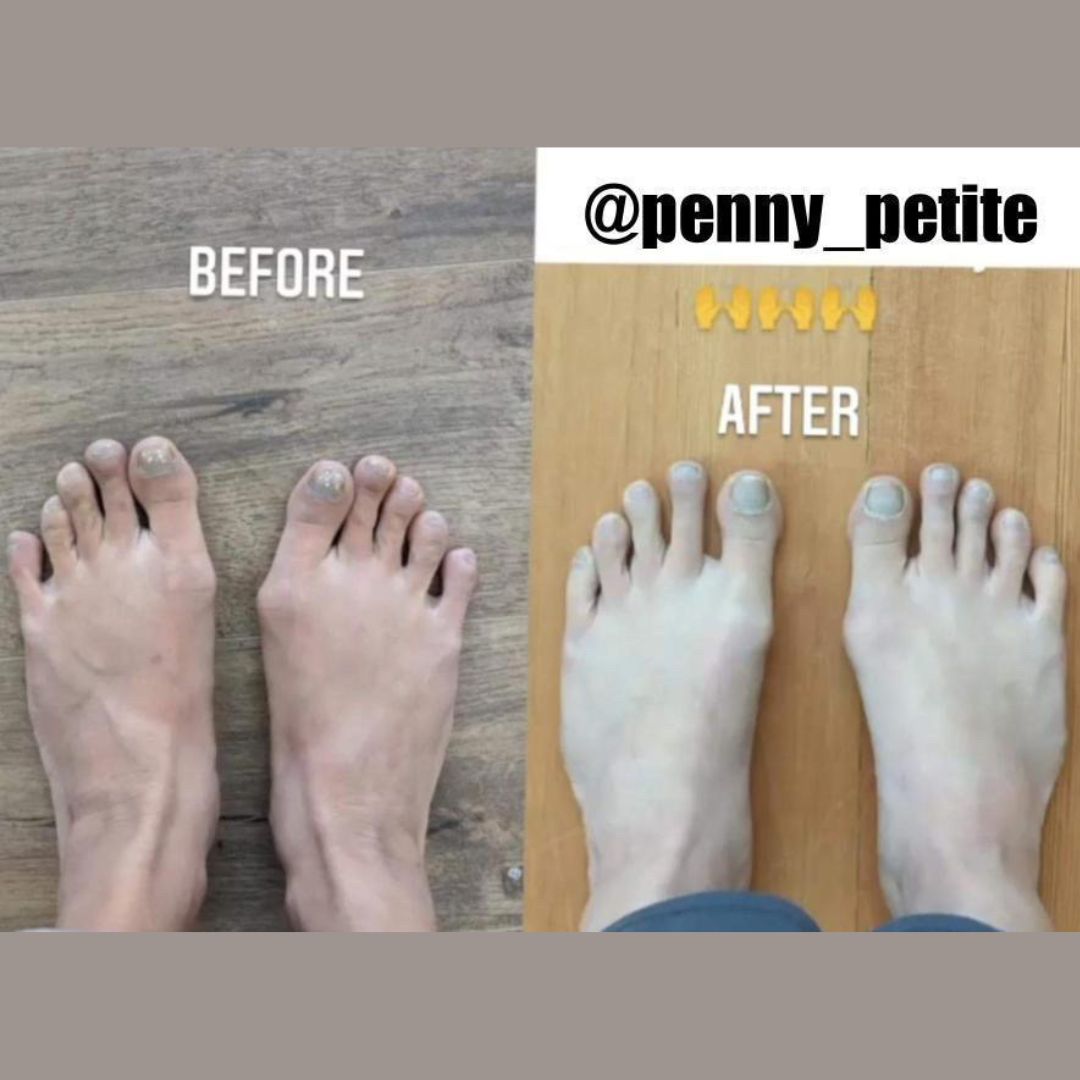
While toe spacers can’t reverse severe deformities, they play a valuable role in managing symptoms and slowing progression.
Reduces Bunion Discomfort
Spacers decrease pressure on the first metatarsophalangeal (MTP) joint, where bunions form.
- Less pain during daily activities
- Slowed progression in mild-to-moderate cases
- Improved shoe fit and comfort
A 2018 clinical trial found that women with hallux valgus who used spacers alongside foot exercises showed significantly better outcomes than controls after one year.
Improves Hammertoe Mobility
Hammertoes result from joint contractures and muscle imbalance. Spacers gently stretch tight soft tissues, improving flexibility and reducing friction.
- Fewer blisters on bent joints
- Increased range of motion
- Delayed need for surgical intervention
One user found that wearing plastic spacers for 30 minutes daily reduced discomfort enough to avoid surgery.
Increases Flexibility and Range of Motion
Stiff, immobile toes are a sign of poor foot health. Toe spacers promote joint mobility by gently stretching surrounding tissues.
Loosens Tight Ligaments and Tendons
Chronic compression shortens connective tissues. Spacers apply a mild, sustained stretch that:
– Increases toe extension and flexion
– Reduces joint stiffness
– Improves dexterity for activities like yoga or squatting
Complementary Practice: Pair spacer use with “toe yoga”—lifting and spreading toes while seated—to accelerate gains in flexibility.
Enhances Plantar Fascia Stretching
Since the plantar fascia attaches to the base of the toes, limited toe extension restricts its ability to stretch during gait. Spacers allow for fuller extension, improving fascial mobility and reducing tension.
- Lower risk of plantar fasciitis
- Better arch flexibility
- Smoother walking motion
Use spacers before stretching or after activity to maximize tissue release.
Who Should Use Toe Spacers?
Toe spacers offer benefits across a wide range of lifestyles and conditions.
Ideal for:
– Runners and athletes: For injury prevention and performance
– People transitioning to minimalist shoes: To ease adaptation
– Those with bunions, hammertoes, or overlapping toes: For pain relief
– Individuals with flat feet: To improve arch function
– Office workers and shift workers: To reduce fatigue
– Aging adults: To enhance balance and reduce fall risk
Not Recommended for:
– People with diabetes or peripheral neuropathy (without medical guidance)
– Those with open sores, infections, or severe circulatory issues
– Individuals with advanced deformities requiring surgery
Always consult a podiatrist if you have underlying health conditions.
Final Note
True foot health isn’t about quick fixes—it’s about consistent, intelligent choices. Toe spacers are a simple yet transformative tool that helps reverse decades of shoe-induced dysfunction. When used correctly and paired with proper footwear and movement habits, they support natural alignment from the ground up—improving not just your feet, but your entire body’s mechanics. Start small, stay consistent, and feel the difference in every step.