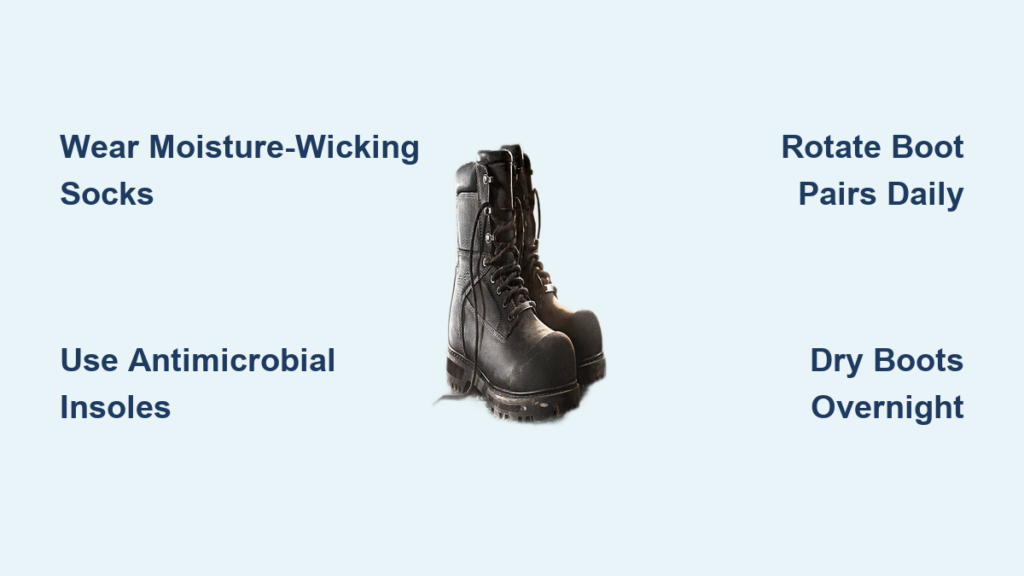
If you’ve ever cracked open your work boots at the end of a long shift and flinched at the pungent smell, you’re not alone. Foot odor in work boots affects millions of workers across construction, manufacturing, logistics, and industrial jobs. The issue isn’t just embarrassing—it’s a sign of trapped moisture, bacterial growth, and poor hygiene that can lead to infections and shorten your boot lifespan. The good news? You can stop foot odor before it starts with a few smart, science-backed habits. This guide reveals a complete prevention system combining daily foot care, smart sock and boot choices, effective drying techniques, and powerful odor-fighting tools—all based on proven strategies used by professionals.
You’ll learn how to break the cycle of sweat and bacteria, choose the best materials, clean boots properly, and maintain fresh feet every day—even on 12-hour shifts. No more boot-shaming. Just clean, dry, confident steps.
Choose Odor-Fighting Socks
Wear Moisture-Wicking Materials
Cotton socks may feel soft, but they’re a top cause of smelly boots. Cotton holds sweat like a sponge, creating a breeding ground for odor-causing bacteria. Instead, choose socks made from merino wool or synthetic blends like Coolmax® or polypropylene. These materials pull moisture away from your skin and dry quickly, keeping your feet cooler and drier. Merino wool naturally resists bacteria thanks to lanolin, while performance synthetics are engineered for high-sweat environments.
Pro Tip: Double-layer socks (liner + outer sock) reduce friction and boost moisture transfer—ideal for long shifts.
Change Socks Mid-Shift
Even the best socks can’t stay dry for 10+ hours. If you work in hot conditions or sweat heavily, change into a fresh pair of socks halfway through your shift. Keep a spare pair in your locker or truck. This simple step cuts bacterial load by over 50% and dramatically reduces odor buildup.
Wash Socks After Every Use
Never reuse work socks without washing. Always launder them in hot water with antibacterial detergent to kill lingering microbes. Avoid fabric softeners—they coat fibers and reduce wicking ability. Dry completely before reuse.
Pick Breathable Work Boots

Look for Moisture-Wicking Linings
Not all work boots are equal when it comes to breathability. Choose models with Dri-Brelle® or Gore-Tex® linings, which allow sweat vapor to escape while blocking outside water. These membranes keep internal humidity low, reducing conditions where bacteria thrive.
Brands like LOWA and BUCKS® integrate climate-control systems that actively manage heat and moisture—ideal for odor prevention.
Opt for Composite Toe Over Steel
Steel toes conduct heat, making feet hotter and sweatier. Composite toe boots, made from lightweight resin or plastic, insulate better and help regulate temperature. Cooler feet = less sweat = less odor.
Check for Ventilation Zones
Some modern work boots include mesh panels or perforated uppers for improved airflow. While not suitable for all job sites, these designs can significantly reduce internal moisture if safety standards allow.
Use Antimicrobial Insoles
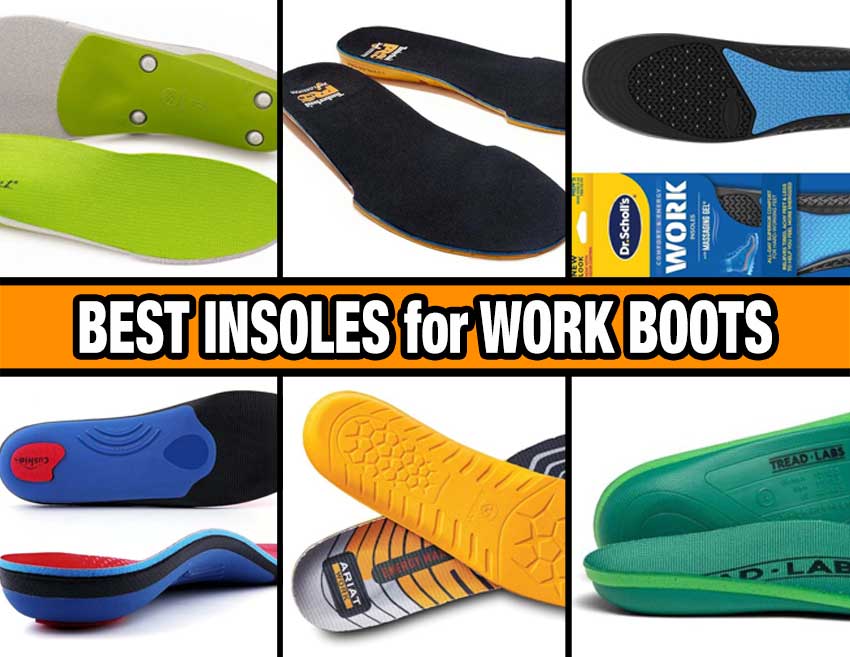
Install Removable, Odor-Resistant Insoles
Standard foam insoles trap sweat and break down over time. Upgrade to removable insoles with antimicrobial properties, such as those infused with silver ions or activated charcoal. These materials inhibit bacterial growth and neutralize odors while wicking moisture away from your feet.
Climate-control insoles go further by managing both temperature and humidity inside the boot—perfect for extreme environments.
Clean Insoles Weekly
Remove insoles after each use and air dry. Wash every 1–2 weeks by hand or in a gentle machine cycle using:
– 1 tablespoon baking soda
– 2 tablespoons white vinegar
– 1 cup warm water
Rinse and air dry completely before reinserting. Never use heat—it can warp foam.
Practice Daily Foot Hygiene
Wash and Dry Feet Thoroughly
Sweat and dead skin feed odor-causing microbes. Wash your feet daily with antibacterial soap, scrubbing between toes and under nails. Rinse well and dry completely—especially between toes, where moisture hides.
Skip this step, and you’re walking bacteria straight into your boots every morning.
Soak Feet to Kill Bacteria
Twice a week, soak feet in a baking soda bath: 3 tablespoons in warm water for 15–20 minutes. This neutralizes acids, exfoliates dead skin, and reduces odor. Alternatively, try a vinegar soak (1 part white vinegar to 2 parts water) to kill fungi and bacteria.
Apply Antifungal Powder Daily
Before putting on socks, dust your feet with antifungal or talcum-based powder. This absorbs sweat and creates an inhospitable environment for microbes. For safer long-term use, choose cornstarch-based powders to avoid inhalation risks linked to talc.
Military Hack: Use a resealable bag filled with antifungal powder—just dip your feet in at day’s end for instant dryness and protection.
Rotate Your Work Boots
Alternate Between Two Pairs
One of the most effective ways to prevent odor is boot rotation. Own two pairs and switch daily. This gives each pair 24–48 hours to fully dry out, stopping bacteria in their tracks.
No second pair? Even removing insoles and laces and storing boots upside down helps speed drying.
Store Boots Properly
Never stash boots in a gym bag, car trunk, or damp garage. Instead:
– Remove insoles and laces after work
– Store boots upside down on a rack
– Keep in a dry, ventilated indoor space
Avoid direct sunlight—it can crack leather and degrade adhesives.
Use Natural Odor Eliminators
Sprinkle Baking Soda Overnight
Baking soda is a powerhouse for neutralizing odors and absorbing moisture. Before bed, sprinkle 1–2 tablespoons inside each boot or fill a sock with it and leave overnight. Shake out in the morning.
It’s cheap, safe, and effective against both smell and microbial growth.
Insert Cedar or Charcoal Packs
Cedar shoe trees or inserts release natural oils that repel microbes and leave a fresh scent. Activated charcoal pouches absorb moisture and volatile organic compounds (VOCs)—the real source of stink. Place either inside boots after work. Recharge charcoal monthly by drying in sunlight.
Try Vinegar Spray for Deep Cleaning
Mix equal parts white vinegar and water in a spray bottle. Mist the inside of your boots weekly. The mild acid kills bacteria and breaks down odor molecules. Let dry completely before wearing.
Avoid overuse—excessive vinegar can degrade certain linings over time.
Clean Boots Regularly
Wipe Interior Monthly
Dirt, sweat, and grime build up inside boots even if they look clean outside. Deep clean the interior monthly (or more often in hot climates).
Steps:
1. Remove insoles and laces
2. Dampen a cloth with mild soap and warm water (or vinegar solution)
3. Wipe entire inside—focus on toe box, heel, and arch
4. Never soak boots—this damages leather and glue
5. Dry with a towel, then air dry completely
Optional: Fill boots with a baking soda sock overnight for extra deodorizing.
Sanitize with UV or Freezing (With Caution)
UV-C shoe sanitizers kill 99.9% of bacteria and fungi in 15–30 minutes. Use daily if you’re prone to infections. Alternatively, some workers freeze boots overnight in a sealed bag—cold kills microbes. But avoid this with low-quality boots, as freezing can weaken adhesives.
Invest in a Boot Dryer
Dry Boots Fast and Safely
A boot dryer removes up to 90% of internal moisture overnight. It’s one of the best investments for odor control. Electric models with fans and gentle heat work fastest. Non-heated versions are safer for delicate materials.
Use every night. Plug it in when you get home—dry boots by morning.
Extend Boot Lifespan
Moisture breaks down leather, glue, and linings over time. Drying boots daily prevents mold, mildew, and structural damage. A boot dryer doesn’t just fight odor—it protects your investment.
Optimize Storage Conditions
Keep Boots in Dry, Airy Spaces
Moisture loves dark, enclosed places. Store boots indoors in climate-controlled areas. Use a dehumidifier in damp garages or basements. Avoid plastic bins—opt for open racks that allow airflow.
Never stack boots—they need space to breathe.
Avoid Sealed Containers
Plastic bags, zippered totes, or closed lockers trap humidity. Even if boots look dry, micro-moisture remains and feeds bacteria. Always store in open air.
Support Long-Term Foot Health
Stay Hydrated to Reduce Sweating
It sounds counterintuitive, but dehydration increases sweat production. When your body can’t regulate temperature efficiently, it overcompensates with more sweat. Drink plenty of water throughout the day to keep cooling systems working properly.
Air Out Feet Daily
Give your feet a break. Go barefoot at home for 1–2 hours daily. This lets skin breathe, speeds natural drying, and reduces microbial load. Just avoid walking on dirty floors barefoot if you have cuts or fungal risk.
Treat Infections Early
Watch for signs of athlete’s foot: itching, redness, peeling between toes. Use antifungal creams (clotrimazole, terbinafine) at the first sign. If symptoms persist, see a podiatrist. Left untreated, infections worsen odor and spread to nails and other footwear.
Final Note: Preventing foot odor in work boots isn’t about one magic trick—it’s a daily system. Combine moisture-wicking socks, breathable boots, antimicrobial insoles, foot hygiene, boot rotation, and smart drying tools to stop odor at the source. Stick to this routine, and you’ll stay fresh, comfortable, and confident—no matter how long the shift.